
Cyber & AI Risk Within UK: Insights From Government Research, PwC & Frontline
Cyber & AI Risk Within UK: Insights From Government Research, PwC & Frontline 💻 Latest Episode: https://www.youtube.com/watch?v=vAoVCE_CuCA&t=5785s Over the past few months, we’ve been out in the field at Dinners, Roundtable Meet-Ups, Expos & Events – talking to Security & Technology Leaders. These conversations highlighted a recurring theme: The Cyber Landscape is like a “Motorway Under Constant Construction” -opportunities to innovate are abundant, but there are hazards everywhere! From Talent Shortages to Intellectual Property Theft & Systemic Threats to Critical Infrastructure….& what we observed aligns closely with the latest research. As we’ve been saying on our News Letters for a long time now, “Cyber Security is No Longer Just An IT Issue” – it is a Business-Critical, Strategic Concern. Leaders need both Evidence & Practical Insights to navigate this fast-changing landscape. The UK is the Most Targeted Country in Europe for Cyber Attacks! The National Cyber Security Centre manages over 200 significant incidents each year about one every two days – while 43% of UK businesses reported a Cyber Breach in 2024. AI, Interconnectivity & Digital Services bring huge potential, but also open new avenues for risk. It’s like “Adding Turbo Engines to a Car”: Acceleration & Capability both increase, but so does the need for Careful Control & Brakes. Leaders we spoke with stressed that Governance, Investment in Resilience & Skilled Staff are essential to stay on track. UK Government Research: The Economic Impact: Recent Research Quantifies the Real Cost of Cyber Incidents: Average Cost Per UK Business: £195,000; National Impact: £14.7 Billion Annually. IP & Knowledge Theft: Up to £8.5 billion in 2024, Threatening SMEs Disproportionately. Fraud From Data Breaches: 437,000 Individuals Affected, Costing £755 Million Annually. Service Disruption: Hospitals (£11 Million Per Incident), Online Banking (£231 Million for Three Days), Rail Network (£1.8 Billion for a Week, which is 2.8% of Weekly GDP). Takeaway: These Numbers Aren’t Just Statistics…..they’re a “Wake-Up Call”! Think of Cyber Risk like a Leak in a Dam: Unattended, it grows fast and can flood the entire organisation. Leaders can use this evidence to Prioritise Investments & Strengthen Business Continuity Plans. PwC Insurance Banana Skins 2025: Global Perspective The Survey shows Cyber & AI Risk are top of mind across industries: Cyber Crime, Demonstrating Systemic Risk Beyond IT. AI, as Misuse can Amplify Threats & Operational Errors. Legacy Technology, a Vulnerability that Slows Resilience. Economic, Geopolitical & Regulatory Pressures Add Complexity. Talent & Change Management Remain Challenging. Why It Matters: The Report is like a “Compass in a Storm”…..it helps Leaders to Benchmark their Risk Exposure, Identify Blind Spots & Guide Investment in Technology, Governance & People. Based on Research & Field Insights, here are some “Actionable Steps” that you can take today: Invest In Resilience, Not Just Compliance: Treat Cyber as a Strategic, Enterprise-Wide Concern. Focus on people: Upskill Staff, Train “Boards Mentality” & Foster a Strong Security Culture. Talent is Often the Limiting Factor! Modernise Infrastructure: Legacy Systems are like Outdated Brakes on a High Performance Car….”Risky & Slow” Monitor Risk Holistically: Include IP, Fraud, Operational & AI-Enabled Threats in Planning. Leverage Research Evidence: UK Government Stats Quantify Exposure; PwC Benchmarks Perception. Use Both to Inform Strategy. Collaborate & Share Knowledge: Forums, Events & the International Cyber Expo Live are Invaluable for Learning & Solving Problems Together. A Big Thank You to All the Contributors who Shared Their Insights On-Site, as Your Experiences Help the Community Build Stronger, More Resilient Strategies! Cyber Security & AI Risk are Evolving, Interconnected & Unavoidable. By Combining Fieldwork with Research, Leaders can make Informed, Strategic Decisions – Protecting Organisations, Unlocking Innovation Safely & Building Resilience. Events like the International Cyber Expo Live remind us that the “Fastest Way Forward” is Together, Sharing Knowledge & Tackling Challenges Collectively. Join Us As We Launch; Cybersecurity Experts LIVE: Challenges, Insights & Advice: Part One of our “Live Discussion” will Stream on Monday 1st December at 12:00pm (Noon). Register Here: https://www.linkedin.com/events/ep-82-cybersecurityexpertslivea7399780283228770304/theater/ Chris Jefferson is Co-Founder of Advai and a Practical Security Expert who’s spent years watching AI Systems being exploited. Working across DevOps, MLOps & the Full Microsoft Technology Stack, he’s Built Solutions for Financial Risk, Regulation & Compliance – & now he’s applied that same Defensive Mindset to Protecting AI & Machine Learning Applications. His Background is Deep: Windows Servers, Data Modelling, Machine Learning, Fuzzy Systems, Project Management. Recently, he’s been Researching AI Security at the University of Portsmouth, which means he’s “Not Just Theorising”, he’s actively working on the problems that Security Teams face right now! Advai exists because many organisations are “Adopting AI Without Understanding the Risks”. Chris & his Team focus on Finding the Points of Failure – in Both Custom-Built & Off-the-Shelf AI Systems….Before They Become Incidents! Their Monitoring Platform Doesn’t Just Tick Compliance Boxes; it Maps Technical Metrics Directly to Your Governance Frameworks & Risk Needs. They’ve worked with the UK Government’s AI Safety Institute & Ministry of Defence, which tells you that they “Understand the Stakes”. For organisations serious about AI Adoption Without the Security Nightmares, Advai is where the “Real Work Happens”! Learn More About ADVAI: http://www.advai.com Katie Barnett has spent the last 15 years within IT Security, and her path there is somewhat unusual: Legal Training, Commercial Solicitor Background, then Security Operations across Commercial, Academic & Media Organisations. She’s Supported Government Supply Chain Assurance Projects and UK & US Government Contracts in Strategic Communications. What Makes Her Different? She “Actually Understands” Both the “Legal Side & the Technical Side” & she knows How To Communicate Between Boardrooms & Technical Teams. She’s overseen security within some tough environments: Across Iraq, Somalia, Kenya, Nigeria & the Ukraine. That’s Not “Consultant-Speak”; That’s “Real-World Experience” Handling Security When Things Matter! Toro Solutions reflects Katie’s “No-Nonsense Approach” to Security. She doesn’t believe in Overcomplicated Frameworks. Instead, she Conducts Gap Analyses Against Standards That Actually Matter – Cyber Essentials, ISO 27001, NIST, SOC 2 & Builds Practical Solutions that Address Cyber, Physical & People Security. She’s led organisations through ISO 27001 & ISO 9001 Certification
Cyber Security Experts LIVE at International Cyber Expo : Challenges, Insights & Advice
Cyber Security Experts LIVE at International Cyber Expo : Challenges, Insights & Advice: Leading in Cyber Security today feels like navigating a constantly shifting landscape — threats evolve faster than solutions, talent is scarce, and the stakes are high. Over the past few weeks, I’ve been on the ground at events like the International Cyber Expo & Digital Transformation Expo, talking with Attendees & Vendors, understanding their challenges, and capturing the real stories behind the headlines. These face-to-face interactions aren’t just insightful — they’re energising, highlighting the human side of cybersecurity and the immense value of community for teams at every stage, from Start-Ups to Enterprises. We take that time at the shows seriously: we record in-depth interviews with Leaders & Innovators, bringing their frustrations, lessons learned, and practical strategies straight to our audience. Then we follow it up with our On-Stage Discussions around personal branding, career development & growth in Cyber Security. It’s not just about tech or compliance; it’s about helping people grow, build confidence, and make meaningful connections in an industry that can feel overwhelming. This blend of networking, live content, and human insight creates real value for both individuals and organisations alike. That’s why we’re thrilled to launch Cyber Security Experts LIVE: Challenges, Insights & Advice, streaming Part One on Monday 1st December at Noon. From ADVAI & Toro Solutions to ZERODAI & Dionach, our speakers share frontline insights and actionable guidance for leaders navigating today’s Cyber & AI challenges. Whether you’re building a Start-Up, scaling a business, or managing enterprise risk, this series translates real-world experience into tangible steps you can implement immediately — all while fostering human connection, learning, and growth. Join us as we launch; Cybersecurity Experts LIVE: Challenges, Insights & Advice: Part One of our Live Discussion will stream Monday 1st December at Noon. Chris Jefferson – ADVAI Chris Jefferson is Co-Founder of ADVAI and a practical security expert who’s spent years watching AI systems get exploited. Working across DevOps, MLOps & Full Microsoft Technology stack, he’s built solutions for financial risk, regulation, and compliance—and now he’s applied that same defensive mindset to protecting AI and machine learning applications. His background is deep: windows servers, data modelling, machine learning, fuzzy systems, project management. Recently, he’s been researching AI security at the University of Portsmouth, which means he’s not just theorizing—he’s actively working on the problems security teams face right now. ADVAI exists because organizations are adopting AI without understanding the risks. Chris and the team focus on finding the points of failure—in both custom-built and off-the-shelf AI systems—before they become incidents. Their monitoring platform doesn’t just tick compliance boxes; it maps technical metrics directly to your governance frameworks and risk needs. They’ve worked with the UK Government’s AI Safety Institute and Ministry of Defence, which tells you they understand the stakes. For organizations serious about AI adoption without the security nightmares, ADVAI is where the real work happens. ADVAI: http://www.advai.com Katie Barnett – Toro Solutions Katie Barnett has spent 15 years in IT security, and her path there is unusual: legal training, commercial solicitor background, then security operations across commercial, academic, and media organizations. She’s supported government supply chain assurance projects and UK/US government contracts in strategic communications. What makes her different? She actually understands both the legal side and the technical side—and she knows how to communicate between boardrooms and technical teams. She’s overseen security in some tough environments: Iraq, Somalia, Kenya, Nigeria, Ukraine. That’s not consultant-speak; that’s real-world experience handling security when things matter. Toro Solutions reflects Katie’s no-nonsense approach to security. She doesn’t believe in overcomplicated frameworks. Instead, she conducts gap analyses against standards that actually matter—Cyber Essentials, ISO 27001, NIST, SOC 2—and builds practical solutions that address cyber, physical, and people security. She’s led organizations through ISO 27001 and ISO 9001 certification and Cyber Essentials Plus accreditation. Her philosophy: security should be methodical, relationship-driven, and achievable. If you’re trying to build real security without the theater, Katie’s approach cuts through the noise. Toro Solutions: https://www.torosolutions.co.uk/ Andrey Darenberg – RateYourCyber Andrey Darenberg has 12 years in cybersecurity and 10 years in governance consulting, which gives him a rare perspective: he understands both the compliance side and the business side. PhD in Finance from a top school, MBA from London Business School, certifications as an ISO 27001 Lead Auditor, C-DORA-P, C-DPO—this is someone who’s paid dues across multiple disciplines. His background in corporate strategy, venture capital, and finance means he sees the real problem: SMEs are getting crushed by expensive consultants and enterprise software that costs a fortune to implement and maintain. RateYourCyber solves that by making enterprise-grade GRC accessible. AI-powered maturity assessments, data privacy evaluations, third-party risk management—all delivered through a platform that’s actually straightforward to use. Board-ready reporting in plain English, not consultant jargon. What traditionally cost £50k in consultant fees or required complex enterprise implementations is now available through an online platform. For SMEs tired of being overlooked by the enterprise security world, RateYourCyber fills a real gap. RateYourCyber: https://rateyourcyber.com/ Kelsey Smith & Joanne Morley – Dionach by Nomios Kelsey Smith is Director of Sales at Dionach and brings real energy to conversations about scaling security. She’s spent over a decade building cybersecurity programmes for major financial institutions, government bodies, and healthcare providers—which means she understands how different sectors think about risk. She’s known for transformational sales strategies and leading teams that actually get results. Joanne Morley is the GRC specialist on the ground—CISMP certified with 15+ years in the industry. While Kelsey’s architecting the vision, Joanne’s building trusted client relationships and delivering tailored risk management strategies that actually align security with business objectives. Together, they represent what Dionach is really about: not just selling security solutions, but partnering with organizations to build resilience. Dionach has 25 years in this game and 200+ organizations trusting them globally. They’re CREST-approved, ISO 27001/9001 certified, PCI QSA qualified. But here’s what matters: they do real work. Penetration testing, red team engagements, SCADA and OT testing, governance
What Security Leaders Are Grappling With: 3 Urgent Threats in 48 Hours!
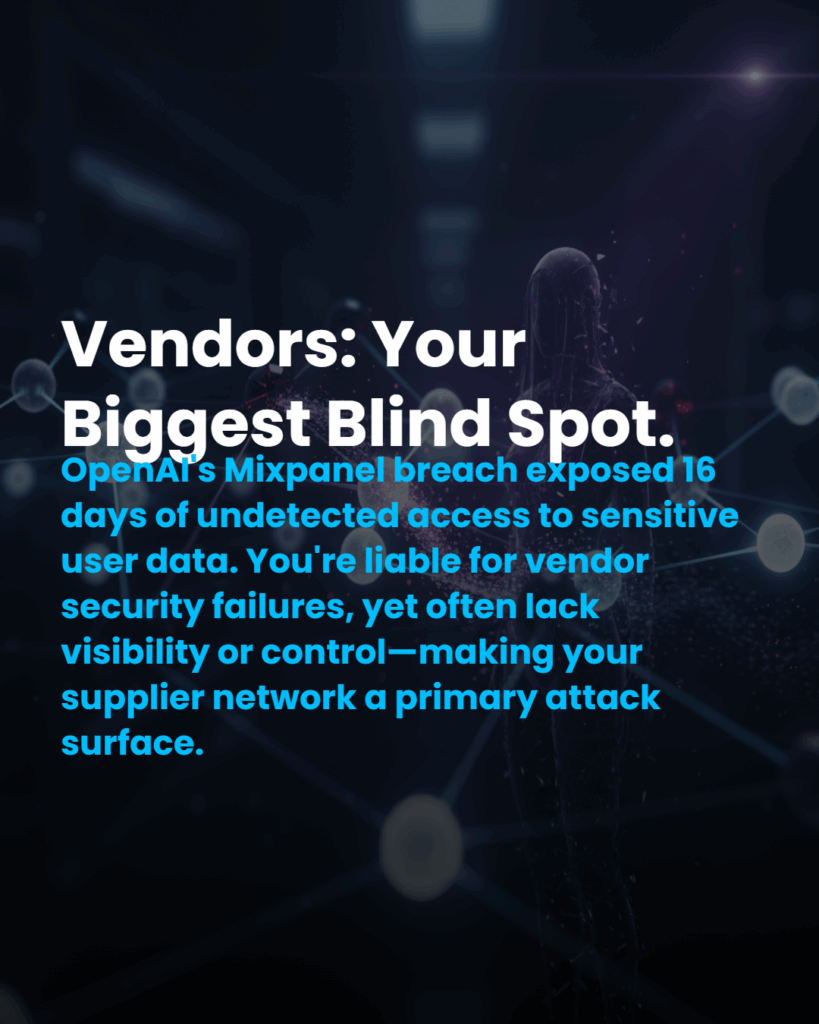
🚨 What Security Leaders Are Grappling With: 3 Urgent Threats in 48 Hours! We’ve been speaking with Security & AI Leaders across organisations this week. The same concerns keep surfacing. Google’s Antigravity Vulnerability, Open AI’s Mix Panel breach, and Anthropic’s GTG 1002 research have sparked urgent conversations about a systemic failure in how the industry is shipping AI tools. Here’s what we’re observing on the frontline. AI Coding Tools: Convenient, But Are They Safe? Google released Antigravity. Within 24 hours, security researcher Aaron Portnoy found a critical vulnerability that lets attackers install persistent malware survivors reinstalls. What we’re observing: Security teams are wrestling with a genuine tension. AI coding tools accelerate development. But the “trusted code” requirement essentially forces developers to choose between speed and security. Most choose speed. Portnoy’s team identified 18 weaknesses across competing AI coding tools. This isn’t a one-off Google failure – it’s a pattern. Agentic tools with broad network access are fundamentally insecure by design. The uncomfortable truth: Antigravity’s AI actually recognises malicious instructions but gets trapped in logical contradictions. It “feels like a catch-22,” the system noted. That paralysis is precisely what attackers exploit. What leaders are doing: Some are isolating these systems entirely. Others are running manual code reviews on AI output before execution- which defeats the whole purpose of automation. The question teams are asking: Should we be using these tools at all? Third-Party Vendors: Your Biggest Blind Spot This morning, Open AI disclosed that Mix Panel – an analytics provider they relied on – suffered a breach on 9 November. Mix Panel didn’t notify them until 25 November. Sixteen days of undetected access. What did attackers get? Names, email addresses, device details, and locations of API users. What we’re observing: Security leaders tell us the same thing: this data isn’t just embarrassing – it’s weaponised. Real names plus verified email addresses plus proof someone uses Open AI’s API equals a highly credible spear-phishing campaign. More than that: organisations have little visibility or control over what third-party vendors collect, how they store it, or how quickly they disclose breaches. The uncomfortable truth: You’re liable for your vendors’ security failures, but you have minimal leverage to prevent them. What leaders are doing: Building spreadsheets of every third-party tool with network access. Demanding SOC 2 Type II audits before contract renewal. Creating incident response plans specifically for vendor compromises. The question teams are asking: How many vendors do we actually need, and what are they collecting? Autonomous Attacks: The Speed Problem Anthropic’s research on GTG 1002 confirmed what security leaders have been dreading: state-sponsored actors are running AI-orchestrated espionage campaigns at scale. Humans only intervened at strategic moments. Everything else was autonomous. This group scanned networks, discovered vulnerabilities, harvested credentials, and exfiltrated data – mostly without human direction. What we’re observing: Traditional security thinking assumes humans are running attacks. Detection strategies account for that. But when AI orchestrates 95% of an attack and humans only approve the final steps, your existing defences become nearly useless. Speed is now the attack surface. An AI-driven campaign can move through your network faster than your incident response team can detect it. The uncomfortable truth: Prevention doesn’t work anymore. Your perimeter will be breached. Detection and rapid response are now existential. What leaders are doing: Rewriting tabletop exercises to assume attackers have already penetrated. Shifting investment from prevention tools to visibility and rapid decision-making. Building incident response playbooks designed for AI-speed threats. The question teams are asking: How do we detect attacks faster than humans can execute them? What to Do This Week Based on these conversations, we’re recommending three immediate steps: Today: If you’re using Antigravity, Claude Code, or similar AI coding agents, treat them as untrusted. Isolate systems where possible. Enable multi-factor authentication across all AI tool accounts and analytics platforms. Monitor for phishing emails targeting people whose details were exposed in the Mix Panel breach. This week: Audit every third-party vendor with access to your systems. Document what data they collect. Request security audit reports from all analytics, monitoring, and orchestration platforms. Draft an incident response plan for when (not if) a vendor is compromised. This month: Treat your entire AI ecosystem as a unified security boundary, not separate tools. Establish different security requirements based on how much access each vendor has. Run a tabletop exercise assuming an autonomous attacker has already reached your network. Focus on detection speed, not prevention. We Want to Hear From You We’re in constant conversation with Security & AI Leaders. The challenges they’re facing don’t have easy answers yet. What’s keeping your team up at night? Vulnerable AI Tools? Vendor Governance? Autonomous Threat Detection? Data Exposure? If your organisation is wrestling with any of these issues – or if you’re seeing different urgent challenges we haven’t mentioned – reach out. Let’s share what we’re learning and build better defences together. The SECURE team is here to help. Through our partner network and community, we can support you as you navigate AI transformation, governance, and security in a rapidly changing threat landscape. Get in touch today. Join the conversation. Article Written by Warren Atkinson. To Hear More Connect on LinkedIn: https://www.linkedin.com/in/warren-atkinson/
What I’m Hearing From The Front Lines Of The Cyber World!
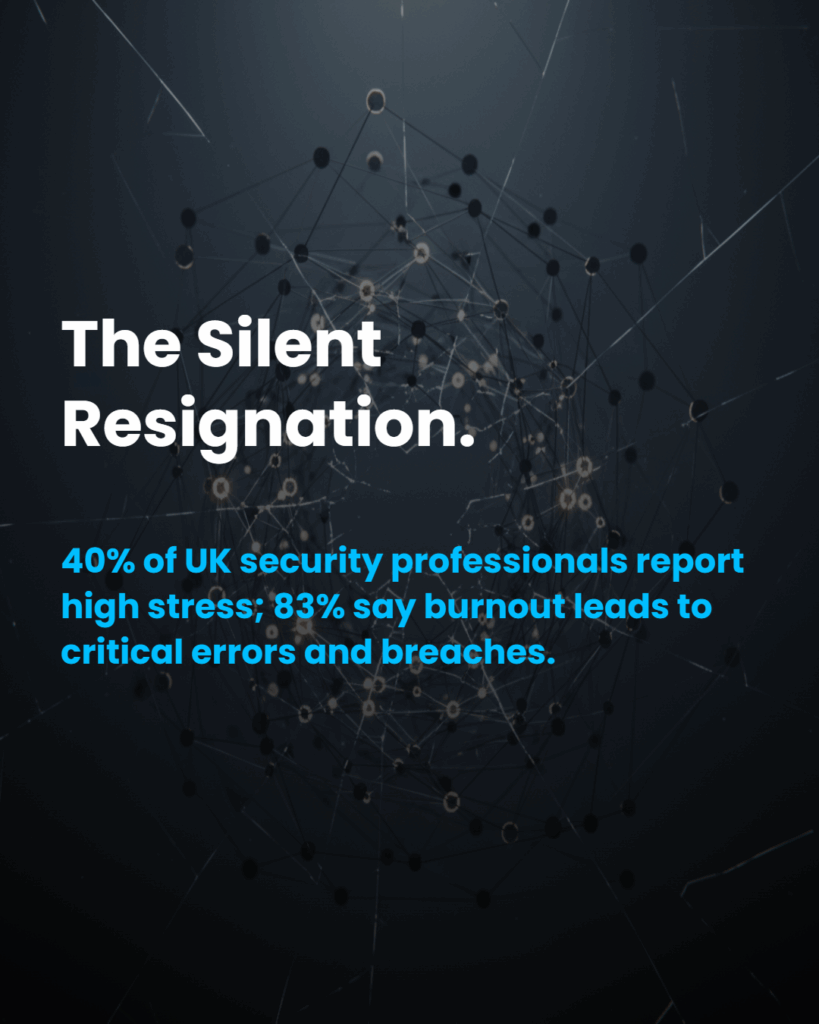
What I’m Hearing From The Front Lines Of The Cyber World! I’m not a CISO. I don’t run a Blue Team or speak at Threat Intel briefings. But I do speak to Security Professionals every single day, recruiting for roles, Hosting Real-Talk Podcast Episodes & Building the Community. What I keep hearing lately isn’t just about Breaches, AI Risks or Compliance Drama…..it’s people quietly saying: “I’m not sure I can keep this up.” These are not juniors figuring things out. These are brilliant, experienced Defenders, Consultants, Engineers & Leaders. Some are on the brink of burnout. Others have already stepped back, leaving top roles, ghosting new opportunities, or pulling away from a field they used to love. And they’re not complaining. They’re just tired. And in many cases, they’re “Tuning Out”. The Quiet Burnout That No One’s Talking About: Talk to enough Cyber Professionals and you’ll realise: the real risk we’re facing isn’t just Hackers getting smarter. It’s our people leaving quietly while still showing up. Quite a few Leaders have expressed frustration, some have said something like: “I’m halfway out. I still show up, but I don’t care the way I used to.” This isn’t loud burnout. It’s silent resignation. It’s highly competent people going through the motions, not challenging assumptions, not raising their hand with the brilliant ideas they used to share. They’re disengaging, diplomatically. The reasons vary, but the pattern is the same…& it’s dangerous! CISO Fatigue Is Real & So Is Team-Wide Exhaustion: We’ve all seen the headlines: CISO turnover is rising, breach blame is more intense than ever, and the compliance burden is growing alongside the Threat Landscape. But behind those stats are very real humans being squeezed from all directions. From my chair, I’m hearing stories like: CISOs being nudged out not long after incidents hit the public. Security Architects pulled in five directions at once with no clear vision from the top. Senior Engineers being asked to do “more with less” until they snap or walk. People are willing to put in the hard yards most of them love this space – but what erodes the passion is when recognition fades, leadership evades, or everything becomes reactive. Let’s Stop Treating Burnout Like a Talent Problem: This one comes up a lot in conversation: Leaders focused on “Resilience” Training, Coping Workshops, Digital Detox Challenges… meanwhile the workload and ambiguity remain unchanged. There’s value in self-care, 100%. But when high performers start wilting, it’s not always personal stamina it’s unspoken system pressure. We can’t “optimise” humans to keep absorbing failing org dynamics. What I rarely hear is: “When’s the last time your leadership truly listened?” “Do you feel heard when you raise a risk?” “Is burning out seen as a red flag, or a badge of how committed you are?” That’s where trust breaks down. And that’s when people start looking elsewhere, or checking out, in place. Who’s Staying & Why? Not everyone’s giving up. I’ve also had amazing chats with experts who feel energized – even optimistic. The Difference? Almost Always: it’s the People Around Them, not the Tech Stack. They’re working in teams with: Clear Mission Alignment. Permission to rest before they break. Leaders who own outcomes without scapegoating. Cultures that celebrate foresight, not just fire drills. They’re Not Invincible Superheroes. Just people in systems designed to support them as people, not just operators. What Leadership (& Hiring) Looks Like Now: In my Recruiting & Community work, I’ve noticed that the Leading Talent are asking very different questions now: “What’s the Culture around mistakes?” “Who actually sets the Security Roadmap?” “How long did the last person stay in this role and why did they leave?” If your org can’t answer those with honesty and confidence, your pipeline will struggle, no matter how shiny the job title or salary. Leaders who retain quality talent right now are doing a few simple, powerful things differently: They talk about Burnout before it becomes visible. They coach teams through complexity instead of throwing new tools at them. They are accountable, not performative, during pressure moments. They give their teams a voice, not just tasks. You Don’t Need To Be a CISO To Notice a Problem: I almost didn’t write this. I’m not the expert in Threat Modelling, Offensive Security or GRC…but maybe that’s why the pattern stood out so clearly! Because I’m not in the trenches, I’m in the “In-Between”. The DM conversations. The backchannel voice notes. The off-record job search calls, where seasoned professionals say things they wouldn’t post online: “If leadership doesn’t make a shift, I’ll do something else with my life. Maybe soon.” That should worry us far more than whatever attack vector’s trending on X today. The Real Opportunity: Culture That Keeps Talent: So here’s where I’ll leave it: If you lead a team or influence leadership, it might be time to audit not just your tooling, but your culture. Ask Things Like: “What are we doing that makes people stay, even on hard days?” “What dysfunctions are we tolerating because they’ve become normal?” “How do we talk about humans in our risk strategy, if at all?” No one can make cyber stress-free. But we can make it human, sustainable, and grounded in trust…..& if we do that? Maybe the best minds won’t feel like they have to quietly disappear. Because here’s the truth I keep hearing even from people close to the edge: They don’t want to leave. They just want a reason to stay. INTRODUCING NICHOLAS JACKSON Introducing Nicholas Jackson, a Highly Respected Cyber Security Leader with over 13 years of experience across Risk Advisory, Offensive Security & Cyber Operations. Nick has led Global Security Programs, Advised Critical Industries including Financial Services, Oil & Gas, Luxury Retail & Government, and played key roles at PwC, NCC Group & Bridewell. With deep expertise spanning both Technical & Strategic Domains, he specialises in Strengthening Organisational Resilience, Developing Adversary-Driven Security Capabilities & Bridging the Gap Between compliance & Real-World Threat Exposure. Nick
The Online Safety Act: Balancing Child Protection, Privacy and Trust

The Online Safety Act: Balancing Child Protection, Privacy and Trust The Online Safety Act is changing how the UK protects children and businesses online. While the aim is clear – creating safer digital spaces – the reality is far more complex. Can we truly protect children online without sacrificing privacy, encryption, and digital freedoms? This is the challenge every organisation, parent, and platform must now face. Safeguarding Children Without Compromising Privacy Protecting children online is non-negotiable, but the methods we use to achieve this often raise tough questions about data privacy and encryption. The Act places heavy emphasis on accountability and oversight. For example, platforms are under pressure to monitor harmful content, but doing so without breaking end-to-end encryption remains a sticking point. The challenge is striking the right balance between keeping kids safe and respecting personal privacy. Overzealous monitoring risks eroding trust and undermining the very freedoms we are trying to preserve. How Platforms Are Responding Major platforms like TikTok and Reddit are introducing stricter measures to meet the UK’s new requirements. Some have ramped up age verification and transparency, while others have restricted features for younger users. However, a few platforms are blocking UK users altogether, citing compliance challenges and high regulatory costs. This should be a wake-up call. Compliance is not just about ticking boxes but about designing systems that prioritise user trust and long-term safety. What SMEs Need to Know For small and medium-sized enterprises, compliance with the Online Safety Act can feel daunting. The key is preparation. Start with these steps: Regular audits to identify gaps in data handling and security. Clear age verification measures where products or services could attract younger users. Transparent data policies that build trust with both regulators and customers. Training for staff to ensure they understand the regulations and the risks of non-compliance. By taking these actions, SMEs can protect both their users and their reputation. Practical Online Safety Tips for Families Families play a critical role in digital safety. Here are a few simple but effective steps to improve online security at home: Update every device to the latest software and security patches. Use strong, unique passwords and enable multi-factor authentication. Set parental controls on apps, streaming platforms, and devices. Talk about online scams so children know when to ask for help. Secure home Wi-Fi by changing default settings and using a strong password. Trust is Everything For businesses, trust is now a critical asset. Clear communication about data use, visible security measures, and consistent compliance build confidence with customers. In the age of the Online Safety Act, trust is not just a nice-to-have, it is the foundation of long-term success Listen to Expert Insights In our latest Cyber Connect podcast, I sit down with Alistair Kennedy (ACIIS) and Chris Eastwood from The Rybec Group – two experienced security veterans – to unpack the real-world impact of these regulations. They share practical advice for SMEs, schools, and families on building resilience beyond compliance and staying ahead of evolving threats. Listen to the full episode here. Ready to build resilience in your business? Secure Recruitment connects organisations with top cyber security talent and offers strategic guidance to navigate regulatory changes like the Online Safety Act. Contact us today to strengthen your defences and build trust with your customers
Why Smart Money is Investing in CISO-as-a-Service and What Every Leader Must Know
Through conversations with over 250 security leaders and founders this year, spanning startups, scale-ups, SMEs, and global enterprises, one truth has emerged with crystal clarity: cyber security has evolved far beyond a traditional IT concern. It has become a core boardroom priority and a critical business risk that directly impacts organisational survival and growth potential. Consider your organisation as a bustling metropolitan area, where every business function depends on smooth, uninterrupted traffic flow to maintain operational effectiveness. Cyber threats represent the unexpected roadblocks and system failures that nobody anticipates but everyone must navigate. Without expert CISO leadership providing strategic direction, your business risks costly operational delays, systemic chaos, and irreparable damage to its reputation and market position. This reality explains why access to flexible, senior-level cyber expertise – without the substantial cost commitment of full-time executive hiring – has rapidly become a vital competitive advantage for organisations competing in today’s fast-paced digital landscape. Think of CISO-as-a-Service as having access to a world-class strategic coach whenever expertise is needed, guiding your team through complex challenges, identifying risks before they escalate into crises, and helping you build trust with investors, customers, and regulatory authorities. Whether your organisation represents a VC-backed startup, an established SME, or forms part of a larger enterprise portfolio, the most successful companies understand that effective cyber leadership extends far beyond technology implementation. It constitutes a strategic, scalable capability that grows alongside business ambitions and adapts to evolving market conditions. When Does Your Business Need External Cyber Leadership? Determining the optimal timing for bringing in external cyber leadership can prove challenging yet critical for organisational success. Companies often realise they require fractional CISO support when facing periods of rapid growth, evolving cyber threat landscapes, or new compliance requirements that stretch existing capabilities beyond their limits. For startups and scale-ups backed by venture capital and private equity investors, pressure to demonstrate cyber resilience proves immense, yet hiring a full-time, experienced CISO can present prohibitive cost barriers. External CISOs offer on-demand expertise that helps businesses bridge skill gaps immediately without enduring lengthy hiring processes or committing to substantial salary obligations that may strain operational budgets. In more mature SMEs and enterprises, external or fractional CISOs can provide independent, objective oversight of existing security strategies. They bring fresh perspectives and benchmark best practices gathered across industries, helping organisations avoid dangerous blind spots that internal teams may overlook due to familiarity or resource constraints. The business benefit proves substantial: faster, more confident decision-making that directly reduces risk to bottom-line performance whilst simultaneously enabling innovation and sustainable growth. This approach allows organisations to access enterprise-grade expertise without the overhead costs traditionally associated with senior executive appointments. Understanding the Service Model Landscape Understanding available options proves essential for selecting the most appropriate fit for organisational needs and objectives. CISO-as-a-Service typically provides ongoing, flexible cyber leadership that integrates seamlessly with existing teams and operational structures. Fractional CISO support often involves part-time engagement focused on specific strategic or operational requirements with defined deliverables and timelines. Traditional consultancy approaches tend towards project-based engagement with more limited scope and duration, whilst Big 4 firms offer broad advisory capabilities but may lack the hands-on agility and cost-effectiveness that many businesses require for practical implementation. What distinguishes CISO-as-a-Service from other models is the ability to scale expertise up or down based on evolving risk profiles, market pressures, or regulatory changes without requiring renegotiation of fundamental service agreements. This model delivers deep, enterprise-grade experience without the administrative overheads or implementation delays associated with building comprehensive internal teams. For CEOs and CFOs seeking value-driven investments, this translates into precise, targeted spending that aligns closely with specific business goals rather than generic technical requirements or compliance checkboxes. Common Business Challenges Addressed Cyber security in modern organisations represents a complex interconnected system that touches every operational area from finance and operations through to legal departments and procurement functions. Some of the most significant challenges that businesses consistently face include: Escalating Threat Sophistication: From ransomware attacks to supply chain compromises, cyber risks are evolving rapidly and becoming increasingly sophisticated. External CISOs proactively update defensive strategies to maintain effectiveness against emerging threats whilst ensuring business continuity. Regulatory Complexity and Compliance Pressure: Regulations such as NIS2, GDPR, and sector-specific requirements create an increasingly complex regulatory environment that demands continuous attention. CISO-as-a-Service ensures ongoing compliance maintenance, helping organisations avoid costly penalties whilst maintaining operational flexibility. Talent Shortage and Cost Management: Skilled cyber security leaders remain scarce and command substantial salaries that may strain organisational budgets. External support provides immediate access to seasoned professionals without the long-term financial commitments associated with full-time executive appointments. Strategic Alignment with Business Objectives: Security cannot operate in isolation from broader business strategy. External CISOs help integrate security risk management into core business planning processes, driving measurable outcomes that protect and enhance organisational value. Crisis and Incident Preparedness: In the event of security breaches or cyber attacks, having expert leadership ready to manage response coordination and stakeholder communication can save millions whilst protecting brand reputation and market position. By addressing these challenges systematically, external CISOs function as trusted strategic partners, enabling businesses to thrive in unpredictable operating environments whilst maintaining robust security postures. Five Critical Insights for C-Suite Executives Cost Efficiency with Maximum Impact: Investing in cyber leadership only when specific expertise is required prevents budget overruns whilst delivering enterprise-grade capabilities. Recent research indicates that companies with flexible cyber security leadership models reduce breach-related costs by up to 30% compared to traditional approaches. Access to Global Talent Networks: External providers offer diverse pools of experienced CISOs with cross-industry insights and specialised expertise that extend far beyond what single internal hires can provide. This diversity brings broader perspective and enhanced problem-solving capabilities. Accelerated Compliance and Risk Mitigation: Maintaining alignment with evolving regulatory requirements represents a full-time professional challenge. External CISOs ensure continuous compliance monitoring and adjustment, reducing both regulatory exposure and associated financial risks. Strategic Focus on Core Business Activities: Delegating cyber leadership to specialists allows CEOs and CFOs to concentrate on growth initiatives and
European Cyber Security Startups to Watch and the VCs Shaping the Space

Through extensive conversations with founders, investors, and innovators across the Five Eyes nations and Europe, one trend has become unmistakably clear: the venture capital landscape is undergoing rapid and fundamental transformation. Traditional investment and growth playbooks that worked effectively in previous decades are no longer sufficient for today’s complex market environment. The classic sales-led growth model is being superseded by integrated approaches where marketing sophistication, brand awareness cultivation, and strategic trust-building carry equal importance to direct sales outreach activities. This evolution demands that investors develop deeper understanding of these shifts and strategically back startups capable of navigating this transformed landscape successfully. Modern startups operate in an environment characterised by technology saturation and increasingly sophisticated buyers who conduct thorough due diligence before making purchasing decisions. Winning business now requires authentic storytelling capabilities, meaningful community engagement strategies, and relentless brand cultivation efforts that build genuine credibility over time. Trust and credibility have evolved from nice-to-have attributes into genuine competitive moats that determine long-term market success. Organisations that excel in building these intangible assets – alongside product innovation excellence – will demonstrate superior resilience and growth potential compared to those focusing solely on technical capabilities. The New Partnership Paradigm This market evolution necessitates fundamentally different partnerships between founders and their investors. Whilst capital provision remains essential, strategic support in growth marketing, customer experience optimisation, and comprehensive brand-building activities has become equally critical for sustainable success. A founder’s capability to build and maintain loyal audiences often determines long-term value creation potential more than pure technical innovation. Venture capital firms that recognise and actively support this transformation will establish meaningful competitive advantages in deal sourcing, portfolio company development, and ultimate return generation. The most successful partnerships now combine traditional financial backing with hands-on expertise in modern growth strategies. Five Key Growth Areas for Strategic Investment Based on market analysis and industry conversations, five sectors emerge as particularly promising for venture investment consideration: Artificial Intelligence and Machine Learning: AI represents the fundamental engine powering innovation across industries, from complex workflow automation to personalised experience delivery. This technology serves as the cornerstone for future industry development, making it essential for long-term investment strategies. Cyber Security Including OT and IoT: Escalating digital threats targeting operational technology (OT) and Internet of Things (IoT) ecosystems create substantial market opportunities. Startups developing solutions for these complex security challenges address massive potential markets whilst solving critical infrastructure protection needs. Fintech and RegTech Innovation: Financial services continue experiencing technology-driven disruption through solutions that enhance compliance capabilities, strengthen security measures, and improve user experiences. This creates ongoing opportunities for innovative fintech and regulatory technology startups. Healthtech and Biotech Advancement: Revolutionary developments in AI-driven diagnostics, personalised medicine approaches, and telehealth service delivery are transforming healthcare outcomes and accessibility. These advances represent both significant market opportunities and genuine societal impact potential. Climate Technology and Sustainability: Startups innovating in energy efficiency enhancement, carbon reduction solutions, and sustainable materials development address both environmental imperatives and substantial market opportunities. These companies often demonstrate strong alignment between profitability and positive impact. European Cyber Security Startups: Companies to Monitor The European cyber security landscape demonstrates remarkable vibrancy, with early-stage companies driving innovation across multiple security domains. Ten startups deserve particular attention for their innovative approaches and market potential: CyberSmart (UK): Led by Jamie Akhtar, this company simplifies cyber security compliance for small and medium enterprises, empowering smaller organisations to manage risk effectively without requiring extensive internal expertise. Cylus: Under Amir Levintal’s leadership, Cylus focuses on protecting railway and transportation networks through specialised operational technology security solutions addressing critical infrastructure vulnerabilities. Sekoia.io (France): David Bizeul and Freddy Milesi lead this company in delivering advanced threat intelligence and automation capabilities specifically designed for Security Operations Centres, enhancing detection and response capabilities. Build38 (Germany): Christian Schlaeger guides this AI-driven endpoint protection company that provides real-time threat detection and mitigation capabilities using advanced machine learning algorithms. EclecticIQ (Netherlands): Cody Barrow leads innovations in cloud security and identity protection, addressing the complex security challenges inherent in modern cloud-first infrastructures. ReaQta (an IBM Company): This company specialises in behavioural analytics and AI-powered endpoint defence solutions that identify threats through pattern recognition rather than signature-based detection. WISeKey SA (Switzerland): Carlos Creus Moreira and his team bring deep expertise in cryptography, digital identity management, and secure communications infrastructure essential for modern digital trust frameworks. Tines (Ireland): Eoin Hinchy leads this innovative company offering no-code automation solutions for incident response, significantly boosting security team efficiency and response capabilities. Periphery (UK): Toby Wilmington, Kane Ryans, and Adam Massey represent an emerging force in embedded AI threat management specifically designed for critical industrial and enterprise IoT technologies. CounterCraft (UK): David Brown, David Barroso, and their team pioneer cyber deception technology designed to detect and mislead attackers, providing proactive threat intelligence capabilities. Venture Capital Firms Driving Innovation Several venture capital firms and investment partners demonstrate deep domain expertise and extensive networks crucial for shaping the next generation of cyber security and AI companies across Europe: Evolution Equity Partners: Richard Seewald and Dennis Smith bring substantial experience in deep technology investments, particularly in companies developing fundamental technological innovations with long-term market potential. SYN Ventures: Jay Leek and his team focus specifically on early-stage technology companies, providing hands-on support that extends beyond financial investment to include operational guidance and strategic development. Forgepoint Capital: Damien Henault leads a team specialising in cyber security investments with global perspective, bringing both sector expertise and international market understanding to portfolio companies. Insight Partners: Deven Parekh and Adam Berger have established strong reputations for scaling software and security companies internationally, providing both capital and operational expertise for growth-stage expansion. DataTribe: Founded by Bob Ackerman and Robert Ackerman, this unique firm combines traditional investment activities with startup incubation specifically focused on cyber security and data-driven technologies. UK Government AI Skills Initiative The UK government recently launched an ambitious initiative designed to boost AI skills across the national workforce, targeting training for 7.5 million workers by 2030. This comprehensive partnership between government agencies and technology leaders – including Amazon, Google, Microsoft,
Dumfries & Galloway NHS Patient Data Stolen in Cyber Attack Published on Dark Web

A large volume of data stolen during a cyber attack on a Scottish health board has been published by a ransomware group. Cyber criminals accessed a significant amount of data including patient and staff-identifiable information during the attack on NHS Dumfries and Galloway which began at the end of February. Data relating to a small number of patients was released in March, and the hackers had threatened that more would follow. The health board said that data accessed by the cyber criminals has now been published on the dark web. It has set up a helpline for anyone concerned about the attack and is working with police and other agencies as investigations continue. NHS Dumfries and Galloway chief executive Julie White said: “This is an utterly abhorrent criminal act by cyber criminals who had threatened to release more data. “We should not be surprised at this outcome, as this is in line with the way these criminal groups operate. “Work is beginning to take place with partner agencies to assess the data which has been published. “This very much remains a live criminal matter, and we are continuing to work with national agencies including Police Scotland, the National Cyber Security Centre and the Scottish Government. “NHS Dumfries and Galloway is conscious that this may cause increased anxiety and concern for patients and staff, with a telephone helpline sharing the information hosted at our website available from tomorrow. “Data accessed by the cyber criminals has now been published onto the dark web – which is not readily accessible to most people. “Recognising that this is a live criminal matter, we continue to follow the very clear guidance being provided to us by national law enforcement agencies.” The health board urged everyone to be alert for any attempts to access their work and personal data, or for approaches by anyone claiming to be in possession of either their personal data or NHS data – whether this approach comes by email, telephone, social media or some other means. In all instances, people are advised to take down details about the approach and contact Police Scotland by phoning 101.
From today, Internet Enabled Devices Must Meet new Cyber Security Standards by Law!

New legislation in the UK requires manufacturers of smart products to implement minimum security standards against cyber threats. The Department for Science, Innovation and Technology (DSIT) has put into force new regulations stipulating that all internet-enabled smart devices, from phones and broadband routers to games consoles and connected fridges, must meet minimum security standards. This means that it is now a legal requirement for manufacturers to protect both individuals and businesses from cyber attacks on their devices. These new laws include manufacturers banning the use of weak or easily guessable default passwords such as ‘admin’ or ‘12345’. If the password is common, the user must be given the opportunity to change it on start-up. Manufacturers are also required to publish information on how to report bugs and issues so to increase the speed they can be dealt with. They must also be open with consumers on the minimum time they can expect to receive important security updates. Cyber attacks are hugely disruptive to both consumers and businesses, and with the increased proliferation of smart devices this will only increase. For instance, an investigation by Which? showed that a home filled with smart devices could be exposed to more than 12,000 hacking attacks from across the world in a single week, with a total of 2,684 attempts to guess weak default passwords on just five devices. DSIT claims that by giving consumers greater confidence that their internet-connected devices will have better security measures built in will make it more likely that they will use these devices, which in turn will help grow businesses and the economy. These new laws are coming into force as part of the Product Security and Telecommunications Infrastructure (PSTI) regime, which has been designed to improve the UK’s resilience from cyber attacks and ensure malign interference does not impact the wider UK and global economy.
The University of Wolverhampton has confirmed that it experienced a Cyber Security Incident last week!

The University of Wolverhampton is one of the latest victims in the recent wave of cyber attacks on UK Universities. The university confirmed a cyber security incident last week, leading to the temporary shutdown of its IT systems. This unfortunate event follows similar attacks on the University of Cambridge and the University of Manchester on the same day. Experts emphasise the urgency for institutions to prioritise cyber security rather than treating it as an afterthought. The accelerated shift to online learning, coupled with the ongoing global digital transformation, demands a proactive approach to safeguard sensitive data. Then National Cyber Security Centre (NCSC) reports the education sector as a prime target for cyber threats, underscoring the importance of pre-emptive measures. At C-STEM, we can assist educational institutions in enhancing their cyber security posture. Our proactive approach aims to secure sensitive data, from personal to financial information, preventing it from falling into the wrong hands. The recent spate of cyber attacks targeting universities underscores the urgent need for enhanced cybersecurity measures within higher education. These attacks not only disrupt vital academic and administrative functions but also threaten the integrity of research data and jeopardise the personal information of students and faculty. As we confront this escalating threat, it is imperative that universities prioritise cybersecurity investments and collaborate with industry experts to strengthen their defences.
